
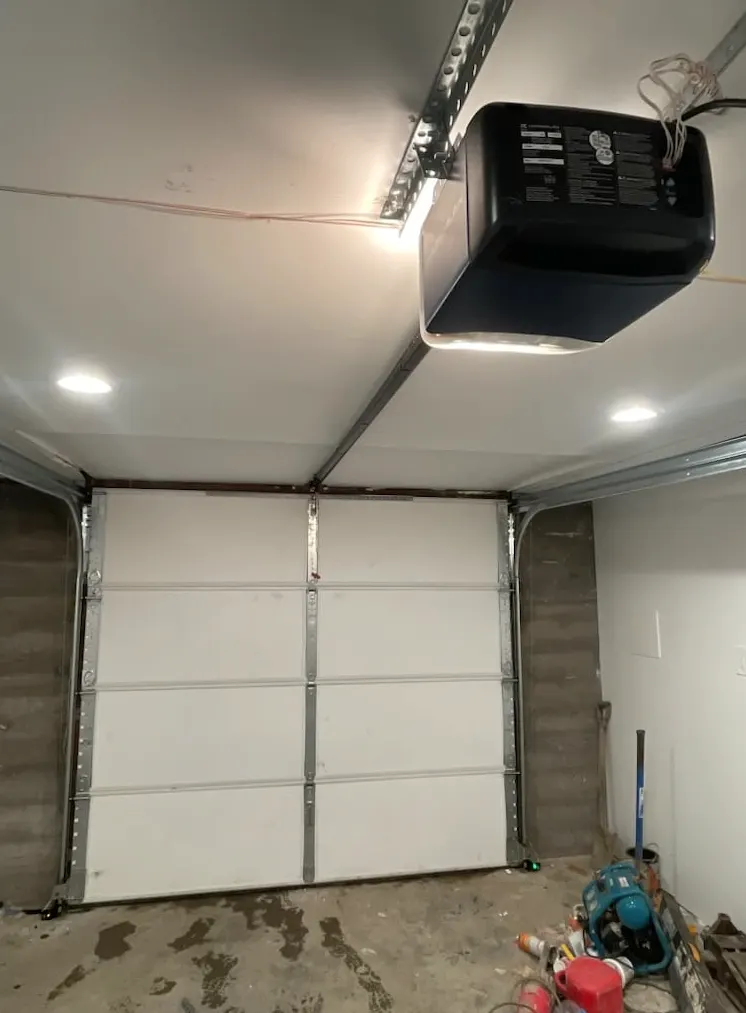
The "We'll Just Pull the Cord" Mistake
Here's the argument, almost word for word, in half the houses that have it: one spouse wants to spend money on a battery backup for the garage door opener. The other says it's not necessary — if the power goes out, you just pull the little red manual release cord hanging from the trolley, lift the door by hand, and deal with it. It's free, it's simple, and it feels like you already have a backup plan built in. That's exactly why it's tempting.
The problem is that manual release isn't really a backup system — it's an emergency workaround, and it comes with real downsides the "just pull the cord" side usually isn't counting. A door lifted by hand doesn't lock the way a motor-driven door does. During a storm, that matters more than people think, because wind-driven rain can push against a door that isn't fully engaged. And if you're opening or closing it manually in the middle of a downpour, in the dark, with a heavy insulated door, you're doing physical labor under bad conditions instead of pressing a button.
What a Battery Backup Actually Does
A battery backup is a unit — sometimes built into the opener, sometimes added on — that stays charged off your home's power while everything's normal. When the grid drops, it senses the loss and switches the opener over to battery power automatically, usually within a second or two. You don't do anything. You just press the remote or the wall button like always, and the door moves.
How It Works, Step by Step
- The battery trickle-charges continuously whenever your household power is on, so it's ready when needed.
- When outside power cuts out, the opener's control board switches to the battery without any input from you.
- Safety features keep working — the photo-eye sensors and auto-reverse still function, so the door won't close on a car or a pet just because the power's out.
- The battery is rated for a limited number of open-and-close cycles, often enough to get you through a day or so of normal use, not unlimited operation.
- Once the battery runs down, you're back to the manual release until power or the battery is restored.
Why It Matters More Here Than in a Lot of Places
Afternoon downpours and hurricane-season systems both knock out power in this part of Florida, sometimes for a few hours, sometimes longer. If a storm hits while you're at work and you need to get the car out, or you need to close the door quickly before wind-driven rain gets into the garage, battery backup means the opener still does its job instead of leaving you to muscle a heavy, humidity-swollen door by hand. It also matters if the garage is one of the main ways in and out of the house, or if anyone in the household has mobility issues that make manual lifting difficult or unsafe.
When It's Actually Required, Not Just Nice to Have
Some Florida building code requirements tied to new construction, permitted replacements, or egress rules can call for battery backup on openers, particularly when the garage functions as a required exit point. Requirements like this vary and get updated, so if you're installing a new opener or doing permitted work, it's worth a quick check with whoever's handling the permit or with your installer rather than assuming either way. Separately, a lot of newer Wi-Fi-connected openers rely on a battery backup just to keep their connectivity alive during an outage, so if you've got a smart opener, you may already have one without realizing it.
The Trade-Offs Worth Knowing
- Battery backup adds to the upfront cost of an opener — national pricing for openers with built-in backup typically runs higher than a comparable basic model, as a general range rather than a quote.
- The battery itself is a wear part. Sealed lead-acid and lithium versions both need replacement every few years, more often in hot, humid garages where heat shortens battery life.
- It's built to run the opener, not your whole garage — it won't power lights, a mini-fridge, or anything else plugged in out there.
- It needs to be checked periodically, which is a good thing to fold into a regular tune-up rather than something you remember on your own.
The Quick Way to Settle the Argument
Ask these questions honestly: Is the garage door one of the main ways in or out of the house? Does anyone in the household struggle to lift a door by hand? Has the power gone out during a storm in the last couple of years for more than an hour? Is the current opener more than ten years old with no battery option available for it? If the answer to more than one of those is yes, the battery backup side of the argument wins.
When to Call Lake Helen Garage Door Repair
If you're not sure whether your current opener can even accept a battery backup, or if it's old enough that adding one doesn't make sense, that's a conversation worth having before storm season catches you deciding in the dark. We handle Garage Door Opener Installation for households upgrading to units with battery backup built in, and we fold a battery and sensor check into our Garage Door Tune-Up & Maintenance visits so it's not something you have to track on your own. We'll look at what you've got, tell you straight whether an add-on backup is worth it or a new opener makes more sense, and get it done without turning your garage into a weekend project.
If you're in Lake Helen, DeLand, Cassadaga, Orange City, DeBary, Deltona, Enterprise, or Daytona Beach and you want this settled before the next system rolls through, call Lake Helen Garage Door Repair and we'll get it sorted.